Saturday, March 30, 2019

Blogging the Museum Visit

Blogging the Museum Visit
March 29, 2019
Sacramento Crocker Art Museum - Arte extraordinario
"Celebrating Hubris with Hijinx" by Juan Carlos Quintana

The artwork that I selected my research on was "Celebrating Hubris With Hijinx" by Juan Carlos Quintana. He was born in America in 1964 and he wanted to provide a humorous tone to his piece. His piece also captures a sort of culture where racist hate groups and xenophobic attitudes are emboldened. The motivation for the piece was hubris, incompetence, arrogance, folly, and violence are being witnessed to the people of that culture. Juan is also known for breaking away from Mexican muralism and for depicting strange and often malformed figures. In a Visual art source page, I was able to find information regarding Quintana's artwork and sort of the reasoning and purpose behind his pieces. The piece was seem to be made in 2017 and his pieces are known to be both "didactic and cryptic". Quintana is searching for a just world and portrays his characters as heroes and villains in a disorderly time where the heroes are actually seen as being defiant and we're also being reminded that music is "defiantly blissful in the face of adversity". I believe that this basically means that music is a way of showing one's happiness even if the world around them is in a sort of chaos. Juan's paintings also portray a "humorous and raucous open ended narrative full of inflatable dancing blow-up men, predatory housing billboards that promote wealth inequality and gentrification, and nouveau riche on their way to a trendy art fair".
Background Knowledge about the piece at
Crocker Art Muesum
  I also believe that in this specific piece it captures what it is actually like to have the "American Dream", and the reason I say that is because in the piece it has the man in underwear happily drinking beer with another lady but below him are a variety of different figures feeling the complete opposite. At the bottom of the piece it has a forearm laid down while holding what looks to be a mariachi looking cheese strip and robbers to the right of it. I think with this part, Quintana uses humor in his piece because of the forearm and the head of a police man on top of a tree stump. The forearm holding the yellow looking mariachi strip may be a representation of the culture being held back in today's society and the robbers may just be a representation of money being a massive problem in our society since it's very scarce for many people and it also determines how wealthy or poor someone is. With the left figure in yellow sunglasses and the figure to the right of it with the hat and what looks to be a gun, 
Notes I took at the Museum on the piece
I think that this portrayal is a representation of the happiness but also the fears of being in America and that although their are joys that come with being here, it is also filled with chaos like government issues or police brutality. The woman on the far left may be a representation of alcoholism and I believe this is due to the fact that her eyes are blacked out and she looks kind of empty. The skull person may just be a representation of everyone being exactly the same and by this I mean that everyone is basically human and should be treated equal. The figure with the banjo represents how music helps cope with the struggles in the world and that no matter how bad it gets, music will help. 
Picture of me with "Celebrating Hubris With Hijinx" by
Juan Carlos Quintana.
Overall my museum experience went quite well, I was able to enjoy going with three of my close friends, one being my girlfriend and since it was the morning time there wasn't that much people and the traffic was not to bad. It was overall really quiet inside most of the rooms but it was really interesting seeing a variety of different pieces and being able to interact with some of the pieces was very fun. When it was quiet I tried my best to just keep up the pace with my friends because I found myself really invested and stuck staring into a lot of the pieces and reading some of the descriptions with the pieces. I found myself sitting down a lot because I would get tired from walking around and looking at all the artwork and the workers all seemed like they were in a good mood so I think that helped with the experience.
One of the Rooms at Crocker Art Museum
   

Wednesday, March 20, 2019

Reading and Blogging: Finish Popol Vuh

Reading and Blogging: Finish Popol Vuh
March 20, 2019
The Popol Vuh by Allen J. Christenson

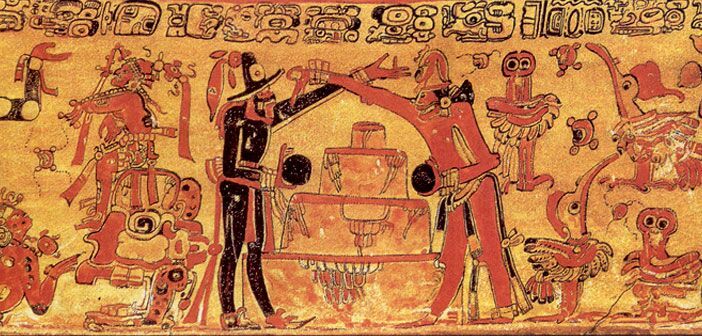
 The Hero Twins at the end of the Popol Vuh had actually made humanity and were able to beat the Xibalbans by achieving their ultimate goal of resurrecting One Hunahpu and Seven Hunahpu. When Hunahpu's head had been restored by tricking the Xibalbans into believing that the chilacoyote squash was the actual head, the Hero twins sacrificed themselves and the Xibalbans thought that they had won. The Hero twins had actually been resurrected but only as people fish then orphans. As they appeared as orphans they were able to hide their face from the Xibalbans and danced before them and while all this was happening, the gods of the underworld has asked them to sacrifice a dog then it was revived and they also burned a home that was soon restored.
 The Hero twins also sacrificed themselves and still managed to get revived again but what the Xibalbans didn't know is that this was all part of their plan. The Xibalbans were so fascinated and convinced that these orphans were doing these actions so One Death and Seven Death asked the Hero twins to actually sacrifice them. One Death was first sacrificed but was not revived and Seven Death was grabbed next but was not killed. The Hero Twins then let all of the Xibalbans who they were and told them about One Hunahpu and Seven Hunahpu and all the Xibalbans were apologizing and thus Xibalba was defeated. With this victory Humanity had actually been created and the Maize god was created. Their father, Hun Hunahpu was resurrected and became the Maize god and the twins actually became the Sun and moon. The actions of the Hero twins explain the origin of the Maya people by showing what type of methods were used to trick opponents and shows the sort of origin of how everything was essentially created, not just the ball game. The story of the Hero twins also helps to give a better understanding about the idea of sacrifice and how it's not looked at as a bad thing but rather a sacrifice in order to gain something good back.


Friday, March 15, 2019

Reading, Watching and Blogging: Popol Vuh video

Reading, Watching and Blogging: Popol Vuh video
March 15, 2019
The Popol Vuh : Mayan Creation Myth Animated by Patricia Amlin

 After watching the animated video there are a couple differences between the video and Popol Vuh book that I saw. A couple of the first differences I saw were that in the video, it talks about how the evil lords of the underworld would kill and sicken people and that they wanted a ball. In the book, the evil lords are more annoyed by the stomping of the ball game so they call upon the twins. In the video it also has the evil lords talk with deep voice so it kind gives an idea of how evil they were.

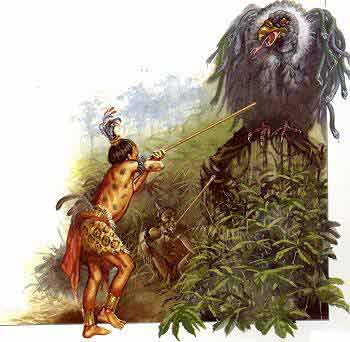
 In the video it left out how they lords would play in seven days because in the book the lords wanted to play the ball game against the hero twins in seven days. In the video it also forgets to put a scene in the book were the falcon gives out a cry to notify the ball players of his presence which was, "Wak-ko! Wak-ko!" and afterwards in the book they hero twins actually shot the falcon with a pellet from a blowgun which is not shown in the video.
  One other difference was when the Seven Macaw was shot in the jaw he called upon old people to help him but in the book it was actually a grandfather and grandmother that helped the Seven Mccaw. In that scene of the video it also doesn't talk about how the grandmother and grandfather planted maize in the Seven Macaw's jaw.
  In addition to the section where the Seven Macaw was introduced, the book has that scene in the beginning section way before the Hero twins enter Xibalba where is the video it has the defeat of Seven Macaw right before. When the Hero Twins arrive to Xibalba they came to four crossroads which were the Black, White, Red, and Blue Road but in the video it only talks about how the Hero twins passed over the Pus and Blood River on their blowguns.

 In the book where the scene of the Twins and lords of the underworld play the ball game they use a ball that has a skull drawn on to it but in the video it shows them using an actual skull in the ball game. In the second trial that the Hero Twins go through which was in the House of Blades in the book but in the video it was called the House of Knives.

 In the video when the Hero twins are in the House of cold they use tree stumps to make a fire to prevent them from dying but in the book it just says that the twins dissipated or exhausted the cold. Soon after the House of cold was the House of Bats but in the book it first talks about the House of fire which was skipped over in the video by the House of Bats. In the video the house of Bats was a scene where Hunahpu was beheaded and then jaguar deer called upon animals to bring food and then a pumpkin was replaced for the head and then the Heart of sky added brains and finished the face of Hunahpu but in the book a squash was used by the coati.
 With all the changes in differences between the book and the video I still feel that the video did a great job at describing the stories of the Maya. I think that having voices for the characters gave a sort of humor to the stories and the animations were really well done for it's time. I felt like the animations gave a better understanding because although the book gives a fair description of what's happening, I felt like the video make the descriptions in the book come to life and gave more meaning to them.


Wednesday, March 13, 2019

Latino USA- "24 Hours at the Border"

Latino USA- "24 Hours at the Border"
March 12, 2019
By: Maria Hinojosa & Maggie Freleng

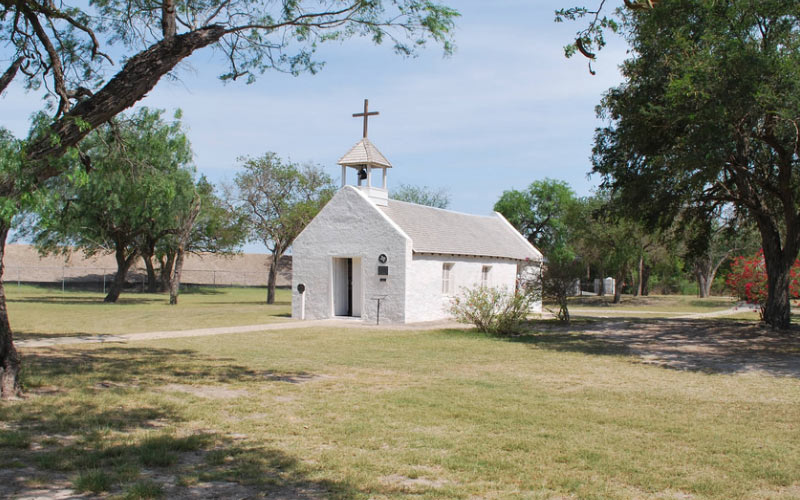
In the Latino USA podcast, "24 Hours at the Border," it talks about how Donald Trump has been fighting for the past two months with congress over the funding of the wall. Trump has made claims that the Democrats are not funding the wall and as a result of that he shut down the government. Maria Hinojosa and Maggie Freleng went to Texas to visit the communities that were going to be affected or already affected by the wall. Maria and Maggie visited the La Lomita Chapel in Texas because it was one of the locations where the wall could potentially cut through. The chapel was built in 1895 and it's pastor Roy Snipes is very aware of the situation that could occur. The church is very small and people have prayed there for over 150 years. Father Roy continues to pray for the church and community around him.

The people of the chapel are actually trying to sue the government for their actions with no sense of remorse. Throughout all this stress, there is a river near the chapel called "Blue Eyes," that Father Roy uses as sort of an escape and relation of mind. According to Roy, the river actually signifies history, romance, and adventure. Unfortunately there are border patrol boats that patrol the river that Maria and Maggie actually get the chance to see. Both Maggie and Maria headed over to Brownsville where a "dragtivist" protest was going on and they were having a drag show on the wall that was already built in that area. The protest was also a fundraiser for the LGBQT community and people actually used the wall as a backdrop when they danced. Maria and Maggie were then called by Mike Benevidez who runs a group called "Teens Brownsville", which is basically a community of asylum-seekers in the Brownsville community. Mike and a few volunteers bring food and provide shelter to asylum-seekers on both sides of the border. He also helps people in a building in the middle of downtown Brownsville where people from India, Cuba, Ecuador, and Bangladesh come to seek help. Most, if not all of these people were released from immigrant detention facilities one of which was in a facility for more than two years and was not released until the day Maria and Maggie interviewed him. One of the woman Maria talked to was being threatened in her country so she had no choice but to flee to the U.S. Mexican officials also try to move people from being in public places like the park and Mike actively asks people everyday what necessities they need and he makes an extra effort to bring it to them. Maria talked to a father with his daughters and he told Maria that the reason he had fled his country was because his daughter had been raped so he fled Honduras and came to the U.S. because he thought it would be safer place for his children. Everyone mainly sleeps in tents and there are a lot of children and towards the end of the day Maria and Maggie go with Mike only to see a white van that drops off two women at a bus station and Mike immediately helps them because they had just come from an ICE facility. The women had been in the detention facility for about 8 to 15 days and had no idea where to go until Mike came a long to help. Maria saw that the women had a look of numbness in their eyes that she would never forget. I really enjoyed how Mike's efforts was really beneficial for all those people going through hell and he makes time out of his day before work to help each and every one of them as much as he can. I also liked how people at the protest were dancing and partying while using the wall as a backdrop. I think what really annoyed me was how the wall affects a lot of people and places like the chapel and I also didn't like how asylum-seekers would be dropped off randomly with no information of where to go next. One topic that I think the radio show could have covered was maybe more about the women asylum-seekers and compare the difficulties for them versus the males. In an article in the New York times, "Deportation Looms, and a Father Prepares to Say Goodbye" by Julie Turkewitz, it revolves around Jorge Zaldivar came to the country illegally in 1997 and he has 5 children who had to say goodbye to him about 7 times and in late February, his stay was denied so he had to say goodbye to his family so they all went to the federal immigration building. Everye was crying as him and his wife walked to the building but not too long after he came back out and was given a month postponement but would have to come back with some sort of bus or plane ticket showing that he was leaving. I chose this article in particular because it focuses on the hardships on immigration and how much it affects these massive amounts of families and it's really tough to not only go through but witness as well.
                                   Deportation Looms, and a Father Prepares to Say Goodbye


Monday, March 11, 2019

Reading and Blogging : Flowering of the Dead

Reading and Blogging: Flowering of the Dead
March 12, 2019
The Flowering of the Dead: An Interpretation of Highland Maya Culture
by Robert S. Carlsen & Martin Pretchel

In the Flowering of the Dead, the article centralizes around the idea that Mayans continued to prolong their culture and adapted the external realities around them. It also talks about how even after the Spanish took over the Mayans land, they were still able to hold their ground and keep fighting for what they believed in. The Maya were also able to adopt a fake front of Spanish influence external but at the same time keeping their Maya culture internal. The Mayans also created a term known as Jaloj-K'exoj which was used to guide the transformations of the local Maya culture configuration. Jaloj-K'exoj was also a helping tool for explaining the cultural patterns which emerged from the Conquest period. The article also explores the idea of Flowering Mountain Earth which I believe to be is about how Atitecos, or people of Santiago Atitalan, still embrace the "old religion" but not all Atitecos share the same religious knowledge. It explores how the old religion is being forgotten but then the concept of being Atiteco or a Costumbrista starts to make a come-back. It was also difficult to grasp on to the old religion too because of the many other religions that were being adopted like Catholicism. Jal is also mentioned to be "the change manifested in the transition to life through birth, through youth and old age, and finally back into death."
El Día De Los Muertos In Guatemala And Mexico 
With K'ex, the article explains that it's the change in generation continuing in life together forming with Jal to form a "concentric system of change within change, a single system of transformation and renewal." The article also talks about how Atitecos were able to portray their understanding of the world through myths, rituals, and beliefs. I believe that the Flowering Mountain Earth represented a sort of plant that represents the different seasons a human life cycle goes through. Atitecos were also able to perceive a likeness between the life cycles of plants and humans which is why the Flowering Mountain is mentioned. It is also mentioned in the article that a grandparent's namesake is referred to as k'exel which means 'my replacement' that becomes the symbolic parent of the biological parent. The different concepts appear in the Popul Vuh for example with the Quiche word for 'spittle', k'axaj which is derived from the same root as K'exoj. Another example is that the "Popul Vuh's excursion into explicit philosophy' attests to the importance of what Atitecos call Jaloj-K'exoj to the ancient Quiche Maya" and that is also clear the "Popul Vuh is clear that the process guides the transformation and renewal of more than just anthropomorphize deities and humans."


Monday, March 4, 2019

Reading and Blogging: Popul Vuh

Reading and Blogging: Popul Vuh
March 4, 2019
Popul Vuh by Allen J. Christenson

One example of the cycle of life and death is on page 121, where One Hunahpu and Seven Hunahpu enter Xibalba or also known as the underworld. The two were playing on the ballcourt above the underworld and were called upon by One Death and Seven Death to come to Xibalba and left behind their mother and rubber ball. The concept of life and death is used in this scene by One Hunahpu and Seven Hunahpu being alive in the chapter until the end were they enter Xibalba where they are technically dead and later to come out and provide knowledge of the underworld. "We must go, but we will not die. Do not grieve," (Christenson 121).

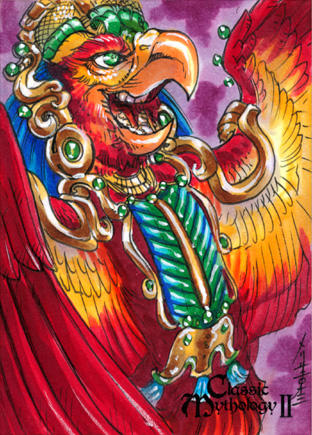
One example of the struggle with nature is on page 92 when the Seven Macaw is introduced and claimed to be the sun and "desired only greatness and transcendence before the light of the sun and moon were reveled in their clarity." (Christenson 93). The concept of struggle with nature is used in this chapter by Seven Macaw sort of describing himself as sort of a god or sun god but is actually similar to a bird because of it's beak and feathery wings. "This, my beak, shines brightly far into the distance like a moon." (Christenson 92).

One example of present tense narration is on page 67 where the Primordial World is introduced and described as empty and sounds of the sea along with the sight of the sky are the main appearances in the chapter. The concept of present tense narration is used when Christenson himself  seems like he is speaking in the Primordial World and is describing the environment and things around him. "There is not yet one person, one animal, bird, fish, crab, tree, rock, hollow, canyon, meadow, or forest. All alone the sky exists." (Christenson 67).

One example of humor is on page 97 where the Seven Macaw is ambushed by Hunahpu and Xbalanque that resulted in the Seven Macaw getting shot by a pellet into his jaw. The concept of humor is used when the Seven Macaw goes home to his wife and says then he had been shot by two demons but is in fact the demon himself. "What have you got there?" asked Chimalmat, the wife of Seven Macaw. "What is it?" "Two demons shot me. My jaw was dislocated by them, and now my teeth torment me with pain." (Christenson 97).