Suppression
In the essay, "Immigration Policy, Criminalization and the Growth of the Immigration Industrial Complex: Restriction, Expulsion, and Eradication of the Undocumented in the U.S.", by Jesse Diaz, Jr. she discusses the stereotypes of immigrants being "criminals" has made made anti immigrant sentiment stronger and has created more support for polices that do more harm to immigrants rather than good. Diaz does a great job providing some insight and statistics on how immigrants experienced more violence towards them rather than inflicting violence on others. She also talks about the stereotype of the linkage between immigrants and crime.
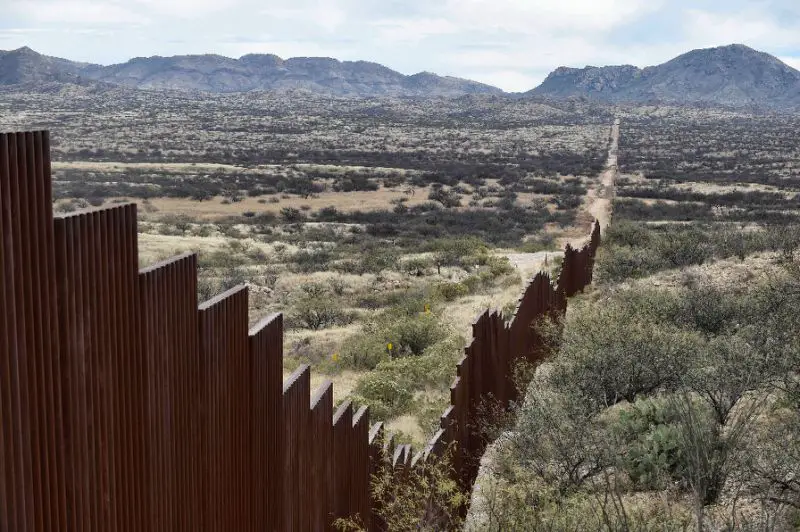 |
| The Mexico- United States border |
The first idea that Diaz tackles on is the ties of immigrants and crime. I believe she does a good job of providing research she has done like, "from the beginning of the 19th century, racially motivated stereotypes employed by the dominant class and law enforcement agencies have served to justify and reinforce associations made between people of color and crime that have fueled the implementation of restrictive and exclusionary immigration policies."(Diaz, 36). She also talks about the idea of "nativism" and how it has affected many of the early migrants and the many labors that they went through. "This nativism also led to enacting restrictive policies against various groups of immigrants of color, culminating in federal policies that virtually blocked their presence in the U.S. once they had been used for their labor" (Diaz, 36 &37). I feel that Diaz has some very intriguing information about the many labors that many of the early immigrants went through and by providing quotes by other scholars makes the essay more believable. Diaz also tackles on the stereotype of linking immigrants with crimes and even provides quotes from other scholars. "Indeed, hostility targeting Mexican immigrants is particularly acute, especially near the México-U.S. border. For example, Kil and Menjívar (2006) equate the U.S. “war on drugs” as the “war on the border.”" (Diaz, 42).
 |
| Nativism in America Today |
The essay overall provides great insight on what the real statistics and consequences that are associated with immigrants's early struggles and I think her takes on all of it has a great impact on many of the readers who have gone through or have families that have been through the same things. I also like many of the information that she provided was quoted by other scholars as well and she is able to provide their names in association with their statistics of different information regarding immigrants. All in all, I can really tell that Diaz was passionate in writing the essay and their was never a moment in the essay where I felt that any of the information she provided felt wrong or misleading.
